Once in a blue moon I converge with popular culture and on this rare occasion it is happening on Valentine’s Day.
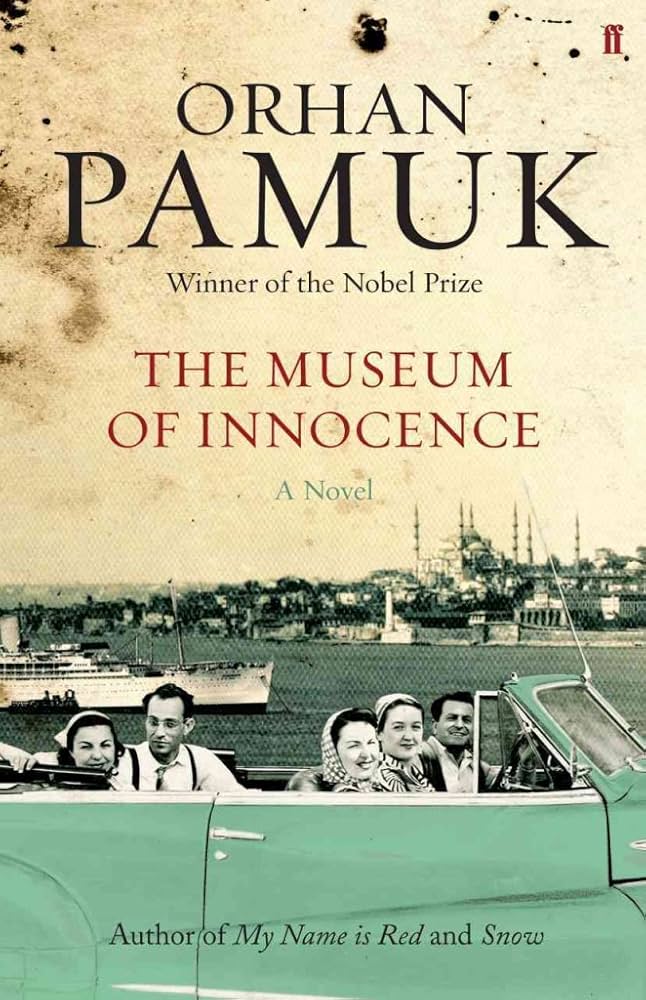
On 13 February Netflix aired its TV show based on Nobel laureate Orhan Pamuk’s novel of the same name, The Museum of Innocence. As an adamant reader of his work I have been enthralled by this project since its announcement. Beyond the question of adaptation, the return of The Museum of Innocence to popular culture once again opens conversations we need to have.
Hüzün, İstanbul and the Museum
Hüzün is routinely translated as melancholy. The equivalence is inaccurate. Melancholy is psychological; hüzün is ontological. It names a condition in which meaning withdraws from the world and the subject becomes aware of a constitutive loss. In its Sufi articulation this loss is separation from the divine. It produces humility, attentiveness, and a form of negative knowledge.
Two coordinates are required to read hüzün in Pamuk: İstanbul and Sufism.
Pamuk’s İstanbul is written from inside this loss. The city’s ruins, fog, water, and derelict wooden houses are not scenery; they are materializations of a withdrawn metaphysical horizon. Hüzün becomes urban atmosphere.
The classical Sufi milieu that shaped Ottoman urban sensibility was institutionally disrupted in 1826. What followed was not simply secularization but a reconfiguration of interior life, more rigid religious forms, later nationalist subjectivities, and a gradual displacement of mystical epistemology. The modern Turkish subject emerges within this rupture, formally Westernizing, affectively unmoored.
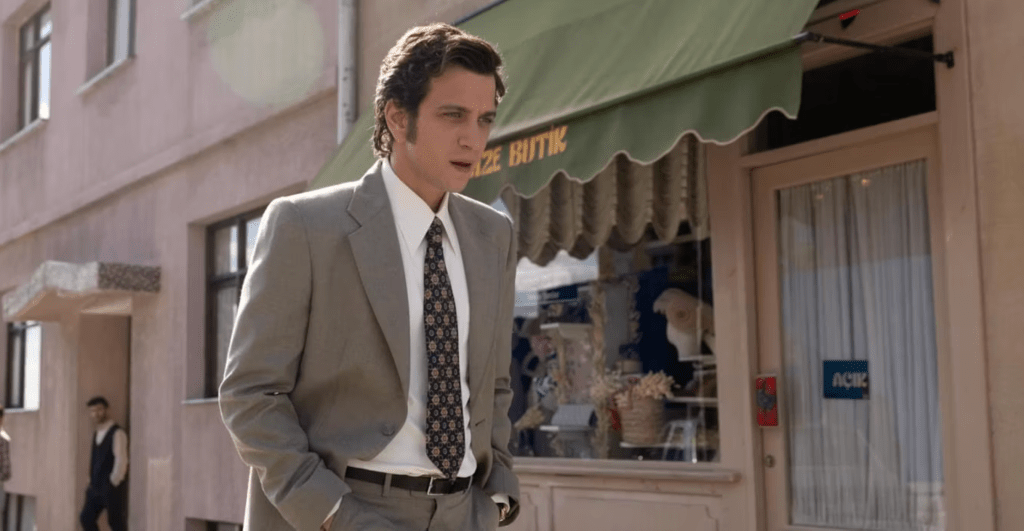
Kemal, the protagonist of The Museum of Innocence, is a late bourgeois subject of this history. He is thirty, affluent, Westernized, engaged to Sibel, and enters an affair with Füsun, an eighteen-year-old relative from a less privileged background. He does not lack feeling; he lacks an interior architecture capable of organizing feeling into value. His father’s injunction—happiness as a life goal—marks the shift from virtue to affect.
His relation to Füsun is not love but substitution. Where the Sufi subject directs longing toward the absent divine, Kemal installs a finite object in the place of transcendence. Füsun becomes a total signifier.
With distance, the fixation intensifies. He gathers objects she has touched, removes items from her house, and compensates by leaving money. The gesture is extractive and archival. By this point he is an unreliable narrator. His behaviour recalls Clegg in Fowles’ The Collector: preservation as possession, possession as love. Objects become “faithful remnants of happy memories,” a formula that replaces relation with material proof.
Apart from an early confession we do not know if Füsun genuinely loves him. She cannot acquire narrative depth because she exists only within Kemal’s gaze. The asymmetry is structural. Kemal the subject and Füsun an absorbed object. As Kemal withdraws from his social world into Füsun’s orbit, the text thickens with private signs—the white dog, the television in the background—repetitions that function as personal omens, a private revelatory system.
Where transcendence is absent, Kemal produces sacrality by displacement. Füsun becomes a cultic center. The structure is devotional but private, without doctrine and without reciprocity. Every sacral form demands a sacrifice. Here the sacrifice is Füsun.
Pamuk’s genius is apparent. The museum formalizes this practice. It is a devotional space without transcendence. Each object testifies not to reciprocity but to unilateral fixation. Memory is vitrined, time immobilized, repetition installed as duration.
Kemal externalizes meaning and borrows happiness from its social image. He feels happy when happiness is staged around him, when it is supplied from outside. Sibel names the condition as sickness; he accepts the term and converts it into vocation, an ode to failure and a refusal of his father’s fate.
He abandons reciprocity for asymmetry, withdrawing from equals into a structure in which he can dominate meaning. He does not invest in a friend, a city, or a shared form of life. All symbolic energy is concentrated in a single object that compensates for structural lack. Cast off from the shared world, his hüzün emerges from this detachment, approaching the divine through the form of love while remaining without transcendence.
Sufi hüzün moves from separation to humility and knowledge. Kemal’s hüzün moves from emptiness to fixation and enclosure. Which makes his story into a tragedy.
The museum holds objects with stories and a man without one. By this measure Kemal is unequivocally a Hero of Our Time.
 salpiozgur.com
Leave a comment