
Every morning I walk up to the counter, greet the clerk with my politest voice, ask for a token, pick my pockets till I catch a coin between my fingers, exchange the money, and leave for the next train.
It has been over a decade since I’ve partaken in this daily ritual. Now, it takes 30 seconds to load a card via an app on my phone.
A hallmark of our age has been the death of ritual. We’ve silently traded ritual for speed. At first glance it seems we’ve made things more efficient, yet further examination suggests the opposite.
Neuroscience suggests the brain needs preparatory time before deep focus. The same rule applies to relationships, events and activities. Switching between tasks or environments too quickly—without adjustment or rite of passage—reduces efficiency, or worse, traps us in the abyss of liminality.
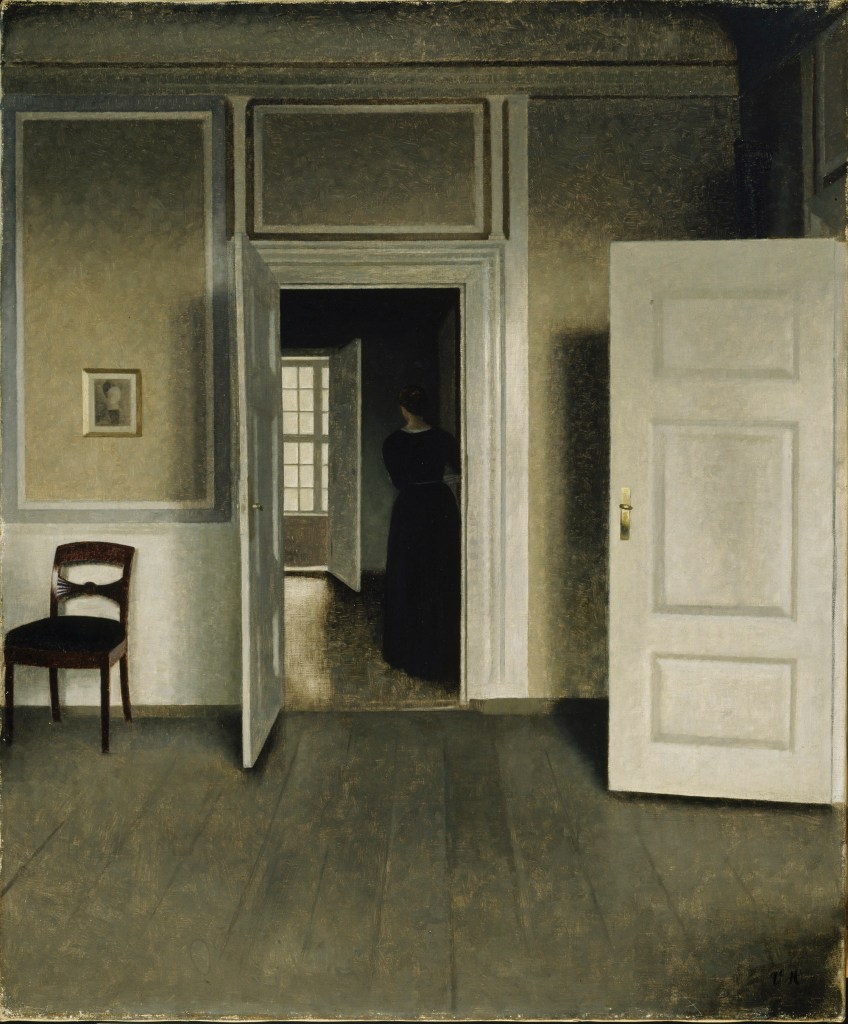
Liminality is a term we borrow from anthropology. It means the middle phase of a ritual where the initiated individual feels lost. It is uncharted territory.
With our modern technologies and post-modern notions, we are living through a period with the highest number of liminal spaces in the post-industrial era, which is causing more trouble and even horror than anticipated. The horror immobilizes individuals and cultures alike, leading many to retreat from meaning altogether.
When transition itself becomes permanent, ritual is no longer a passage but a paralysis. What purpose, then, did ritual serve in the first place?
Rituals are often associated with esotericism. Witches, covens and spirits. While I condone rituals to have a transcendental quality, they are still at the confines of the material plane.
A successful ritual prepares the individual for their next journey, status or role. Imagine you’re introducing two friends. You wouldn’t just place them in a room and expect them to be instant friends. For a successful bond, both parties need to be introduced properly with respect to their personhood. When steps are skipped, essence is diluted.
As children we’re shielded from life’s full intensity until we can bear it. Without that scaffolding, experience overwhelms us; the ritual then collapses into cynicism.
In my experience as an event hostess and facilitator, ritual is crucial for the successful bonding of groups and achievement of goals. Skipping steps or fast forwarding conversations steals from the experience.
As Chesterton’s Fence goes, we appreciate the true value of ritual when we realize why it came to be in the first place. Rituals create certainty in an uncertain world.
Renewal does not mean imitation. Ritual isn’t an heirloom; it’s a method of continuity. If we try to do it exactly as prior generations did, we would be missing the point and only creating a facade, a substanceless performance. Every generation and every individual must create their own rituals.
Our day and age have different needs. We’re bound to create digital rituals whether we’re conscious of it or not. Even our reflexive gestures—checking notifications, opening an app—could become digital rites if performed with awareness. The way we gather for meetings, mark workplace milestones, celebrate graduations, mourn death. These are happening; the question is whether we’re doing them intentionally.
We need to be extremely candid about what we need and what would help. Initially to ourselves, then to our communities. What marks the beginning of your workday? What signals its end? How do you prepare yourself to enter a conversation that matters? How do you exit one?
A civilization without ritual forgets how to metabolize change. The problem isn’t technology but amnesia. We’ve forgotten that transitions require time, attention, and form.
The future belongs to those who can re-ritualize the digital, turning even transient exchanges into forms of initiation and belonging. Not by rejecting the phone or the app, but by treating them with the same care we once gave the coin and the counter.
As I reach for my phone each morning, some part of me still seeks the coin, the glance, the brief exchange that told me I was leaving one world and entering another.
 salpiozgur.com
Leave a comment