On my first morning in Kaunas, a monk accidentally blessed me—a sign that this trip would be something special.
As someone who attracts eccentric moments, I took it in stride. But the real surprise came just fifteen minutes later. Strolling through the old town, I spotted kids as young as two or three playing freely, a sight that left me in awe. As a born-and-bred Istanbulite, the idea of children roaming the city centre without a care is almost shocking. That moment, so unexpected and vibrant, became one of the highlights of 2024 for me—a beautiful reminder of the joy that freedom brings.

If you want to skip straight to the travel suggestions, scroll down but if you’re curious about why Lithuania has the happiest youth, stick with me.
When I landed in cloudy Lithuania on a chilly spring day, the only thing I knew about the country was that it had the happiest youth. After three weeks there, I wanted to dig deeper into why this was the case. I owe a huge thanks to my Lithuanian friends, who patiently answered my endless questions—I can be a bit of a handful.
According to the World Happiness Report, Lithuania has the happiest youth (individuals under 30), followed by Israel and Serbia. This data is especially interesting because, while the top-ranked countries for overall happiness show similar life satisfaction levels across all ages, Lithuanian youth report much higher life satisfaction compared to older citizens. You can see the disparity for yourself:


Before we explore why Lithuania’s youth are so much happier than the elderly—and what this reveals about broader generational trends—let’s break down the criteria behind these rankings.
The World Happiness Report bases its rankings on the following:
GDP per capita is self-explanatory—being able to cover life’s basics significantly improves quality of life.
Social support is fascinating to me. Living in different countries and transitioning into adulthood has shown me that trust is the greatest asset in both personal and public life, as it fosters freedom. For example, the freedom to walk down the street without fear or knowing that children are safe in their community is foundational to well-being. Safety and social support reduce suffering and enhance freedom across many areas of life. However, I believe this support is best provided by decentralized, civil institutions rather than the state.
Healthy life expectancy is another clear factor—Lithuania ranks poorly here, which likely contributes to the unhappiness of the elderly.
Freedom to make life choices, measured by perceived autonomy, plays a crucial role in well-being. A strong sense of agency can even become a self-fulfilling prophecy, enabling individuals to live more freely. Trust is key: in low-trust environments, people are preoccupied with safety, which hinders long-term planning, particularly for young people.
Generosity goes beyond just donations—it’s about creating opportunities and extending second chances, reflecting a society’s ability to foster well-being.
Perceptions of corruption further demonstrate the importance of trust; higher trust correlates with less perceived corruption.
Finally, the report’s measures of positive and negative affect show that freedom from negative experiences is essential for well-being, though it’s not enough to sustain meaning.
Lithuania, for instance, ranks low on positive affect but experiences fewer negative emotions, suggesting a neutral emotional state rather than frequent joy or struggle. This is particularly interesting because Lithuania also has the highest suicide rate in Europe.
Ultimately, how we define happiness, affect, and well-being affects the reliability of such data.
How do we define happiness?
Happiness is a layered concept, with interpretations varying by context. On one hand, there’s the hedonic view, which focuses on chasing pleasure and avoiding pain—indulging in life’s immediate joys. Then there’s the deeper, eudaimonic perspective, rooted in living a purposeful, meaningful life, often tied to Aristotle’s idea of flourishing through virtue. Psychologically, it manifests as subjective well-being—how we gauge our life satisfaction and emotional state—while flow captures that sense of being fully immersed in fulfilling activities. Across cultures and spirituality, happiness is often about finding inner peace, connection, or collective well-being. Ultimately, it can be fleeting or long-lasting, depending on how we balance these dimensions in our lives.
All of this makes happiness difficult to measure. When discussing human flourishing, we often turn to other metrics like productivity, healthy life expectancy, and so on.
Truth be told…
If I’m being honest, I think the ranking is somewhat tenuous—not just because happiness is poorly defined, but because almost half of the criteria rely on perceptions rather than material realities. I’d recommend reading Reddit posts like this for a first-person perspective. While Lithuanian youth claim to be very happy, there’s a lot going on beneath the surface, including high levels of brain drain, which signals that there’s more to the story than the ranking suggests.
My main takeaway from diving into this topic confirms my gut feeling: In your twenties, being free from hassle is almost all you need. While meaning, achievement, and legacy become more important as we age, we still need to fulfill our basic needs before we can truly pursue happiness.
It’s no surprise, but in your 20s, living in a safe city with some trust in your government and fellow citizens—while being able to shop at your local Humanas without breaking the bank—might just be the key to life satisfaction.
Now onto the good part…
The Good Part
Alright, here’s the bit for museums, food, and other fun stuff. You can always find regular suggestions on any TripAdvisor page, so here are my personal highlights.
Vilnius
Vilnius is a lovely city to stroll through, offering a variety of attractions for visitors. For me, the charm lies in the calm, quiet, and art.
Church of St. Anne and Bernardine Complex
Apparently, Napoleon was so taken with this church that he wished he could bring it to France—and I can see why. The flamboyant architecture is striking. Flamboyant style isn’t common outside of France, and we only have a few stark examples. I spent quite some time in this church admiring the intricate embellishments and the atmosphere. I’d highly recommend it to anyone visiting.
Užupis & Literature Street
If you had a hipster phase at any point in your life, you’ll love these places. Užupis is in the old town and part of the UNESCO World Heritage list. It’s often compared to Freetown Christiania in Copenhagen, but to me, it felt more like Telliskivi, Sevkabel Port, or even Bomontiada. See it for yourself and decide.
Open Gallery
If you like street art and murals, check this out. It’s nothing fancy—basically a parking lot in the middle of nowhere—but I was drawn to the art and wanted to be inspired by it. The effort to make ordinary places beautiful is always a worthwhile endeavor.
MO Museum
I’m excited about this one because the exhibition “Down the Rabbit Hole” was one of my favorite contemporary exhibitions this year. If you’re an art enthusiast with a penchant for contemporary art, you’ll enjoy it here. I can’t speak for their temporary exhibitions since I’ve only seen what was on at the time, but the collection and curation seem promising. Plus, the staff was kind and helpful.
Humana
I don’t know if you’ve heard of Humanas, but everyone in Lithuania loves it. It’s a thrift store with loads of great-quality items, and it’s incredibly fun to hunt through! I wanted to check out some flea markets, but I didn’t get the chance—maybe next time.
Kaunas
Kaunas is one of those cities where you need to invest some time and effort to truly uncover its hidden gems. But once you do, you’ll discover some real pearls.
Interwar Architecture
While Vilnius is known as the “Baroque City” of Lithuania, Kaunas proudly embraces its modernist identity—and I think it’s far superior. The district featuring these modernist buildings is now listed as a UNESCO World Heritage site and is definitely worth a visit. Along the way, you’ll encounter some museums, but honestly, the architecture steals the show. I’m looking forward to spending more time here.
Where Rivers Meet
If you’re visiting Kaunas Castle, take a moment to stroll along the path that leads you to the meeting point of the Nemunas and Neris rivers. The view is a lovely bonus to your visit.
Perkuno House
Originally built by Hanseatic merchants, Perkuno House is an architectural gem. Secular Gothic buildings are a rarity, and this one stands out. Fun fact: at one point, this building served as a school, and one of its students was the renowned poet Adam Mickiewicz, who interestingly lived in Istanbul for a time as well.
Yard Gallery
I absolutely loved this place! It’s essentially an alley adorned with quirky art that commemorates the history of the space. While some pieces are undeniably kitsch, the gallery serves as a living monument to the previous inhabitants of the alley. It’s a cool spot to explore.
Food
I can’t explain my obsession with meat-filled pastries, but I do know that I loved Kibinai. This delightful dish was introduced to Lithuanian cuisine by the Turkic Karaites.
Other honorable mentions include Barbie Soup (a refreshing cold beetroot soup) and tree cake. If you’ve read my previous posts, you know how much I adore Borscht, so this should come as no surprise.
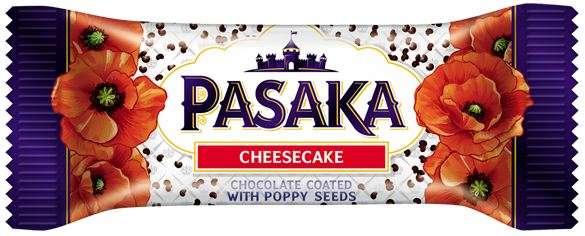
And then there are the glazed curd cheese bars—you can find these almost everywhere in Lithuania. They’re incredibly cheap, popular, and addictively delicious. Honestly, I’m almost relieved we don’t have many of these back in Germany!
Wrapping Up
Of course, a short stay and brief research can’t capture the full picture of Lithuania, but I believe this post allows us to scratch the surface. Even if you don’t agree with my views on happiness, I hope you find something useful in my recommendations.
This concludes the second part of my Baltic Trilogy. If you’d like to read about my experiences in Tallinn, click here. Next up, I’ll cover Latvia.
Take care, have fun, and see you in the next one!
Resources
BBC News. (2023). “Lithuania happiest place in the world for young people.” Retrieved from https://www.bbc.com/news/world-68615052
The Guardian. (2024). “Lithuania happiest place in the world for young people.” Retrieved from
World Happiness Report. (2024). “The Happiness of the Younger, the Older, and Those in Between.” Retrieved from https://worldhappiness.report/ed/2024/happiness-of-the-younger-the-older-and-those-in-between/#ranking-of-happiness-2021-2023
Happiness Report Appendix. (2024). “Ranking of Happiness, 2021–2023.” Retrieved from https://happiness-report.s3.amazonaws.com/2024/Ch2+Appendix.pdf
U.S. Department of State. (2023). “2023 Report on International Religious Freedom: Lithuania.” Retrieved from https://www.state.gov/reports/2023-report-on-international-religious-freedom/lithuania/#:~
=According%20to%20the%202021%20census
CEPR. (2020). “The Persistently High Rate of Suicide in Lithuania.” Retrieved from https://cepr.org/voxeu/columns/persistently-high-rate-suicide-lithuania
Macrotrends. “Lithuania Suicide Rate 2000-2024.” Retrieved from https://www.macrotrends.net/global-metrics/countries/LTU/lithuania/suicide-rate
NBER. (2014). “Economic Studies on Suicide Rates.” Retrieved from https://www.nber.org/system/files/working_papers/w19950/w19950.pdf
Made in Vilnius. (2023). “Why Young People in Lithuania are the Happiest in the World.” Retrieved from https://www.madeinvilnius.lt/en/news/Lithuanian-news/ask-why-young-people-in-Lithuania-are-the-happiest-in-the-world
 salpiozgur.com
Leave a comment