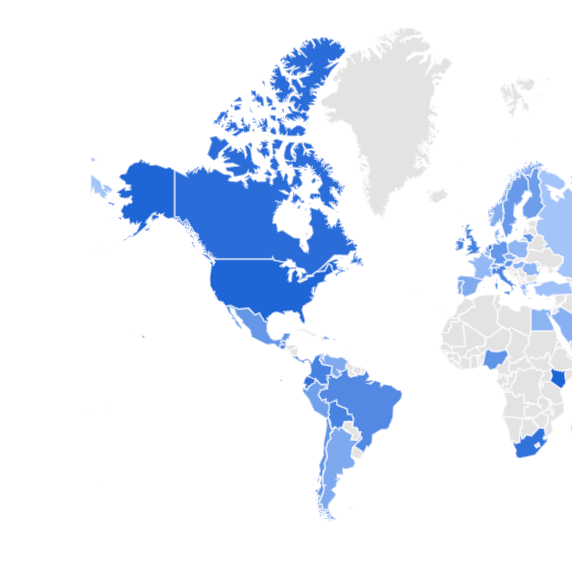
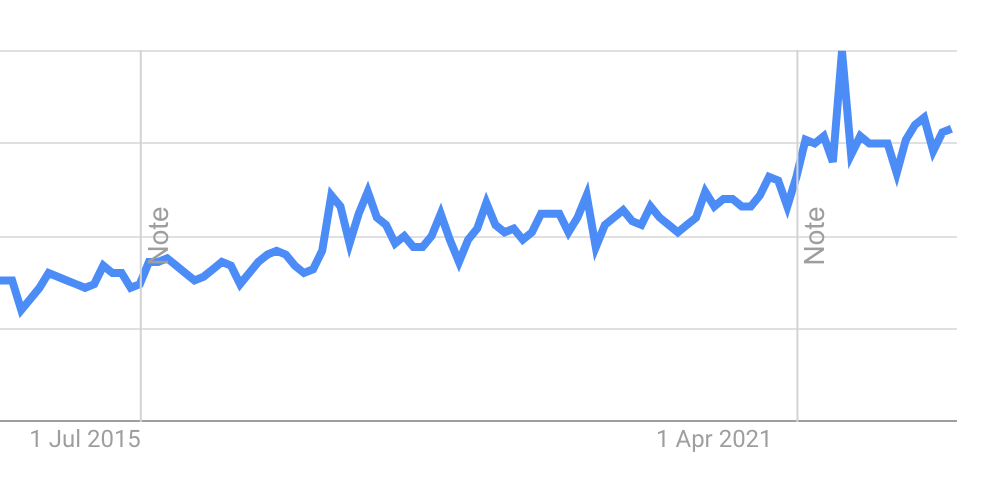
Google Trends show a steady increase in searching the word trauma. For the sake of public discourse, I am content that now we talk more about mental health. The issues is, talking about mental health through the lens of singular events or early childhood adversity feels restricting. It gives us a limited perspective on what quality of life means. Factors such as close relationships, nutrition, and exposure to nature are usually left out and mental health is reduced to trauma. If you are interested in books and characters here is a fun read for you.
My purpose is not to attack this cultural reflex. It is understandable. In fact, it fits in perfectly with the current metanarratives.
Life is both simple and complicated. Complicated in the sense that we don’t really know whats going on. The important questions. Why are we here? What is the purpose? Is there a purpose? Do I really like my friends or do I just hang out with them just not to seem like a loser? Stuff like this. On the other hand, it is simple. You eat, you breed, you die.
Since complicated questions get in the way of a simple life, humanity has been coming up with different answers such as gods for a very long time now. Mythological thinking has never been the output of being primitive or lacking intelligence on the contrary it was the by product of intelligence. We started out with myths because myths link with our psyche deeper than logos. While reason is static myths are dynamic. It conjures the deep movement within the human consciousness into words and stories. After the reign of mythical thinking ended by institutionalization religion came into the picture and we all know how that went. Nowadays, it is the political narratives. Climate narratives, Woke Narratives, and even Trauma Narratives.
Narratives of the modern day have one big shared quality with its precedenteds. All of these narratives accept a higher power with destructive components that humans must overcome through sacrifice. Trauma is a scar much like the original sin. It leaves a mark for life and it is your duty to “heal” or seek repentance. Apocalypse is cut from the same cloth as Climate Doomsday. Both are seen as results of punishment for human indulgence and both are anti-humanism by origin. One example where this thought pattern became undeniable was during the pandemic. When humans weren’t roaming the streets and dolphins were back in the Venice canal many people were cheering on.
Myths, religion, and culture do not stem out of nowhere. They are useful tools to handle reality. While the consensus suggests society is past religion, we are seeing proof that this is not the case over and over again. We also need to consider that that all of our symbols are embedded in culture and that even the most militant atheist might involuntarily adopt these knee-jerk responses.
Trauma is one of the scientific a.k.a modern day appropriate ways to live out our religious habits. What happens when you remember that one time your elementary school teacher slapped you? Maybe you journal about it, talk to a therapist, go to a self-healing seminar… There is an unspoken use in this. When we remember past trauma and allow ourselves to suffer for it by this we let go of the tension for other corresponding problems in our present-day life. Yet, this shouldn’t be interpreted as focusing on trauma causes improvement in life.
Today’s culture is grief averse. It is a natural result of pace incompatibility. Life is fast, grief is slow. Information travels instantly, emotions take time. We also lost ritualistic practices and mourning as a group which adds to the tension we feel. When we allow ourselves to suffer for a trauma we are allowing ourselves to grieve too. We think this is healing from a trauma when in fact it is something completely different. It is growing. Healing means reverting to the whole state before an injury happened. Growing is exceeding the boundaries of the current.
Grieving never reverts us back to our original state. It is the acceptance that the original state is gone and thus experiencing the world in a new form. Grief and trauma are diametrically opposed. Trauma healing is a promise of reverting back to the original state, detached from reality, rooted in escapism, and hung up on fantasy. Grief is connecting with the reality as a transformed being.
During our lifetime we go through small and big shifts and at every turn we leave a part of ourselves behind. When we break up with a partner we also break up with a version of ourselves. This calls for grief.
Grieving is not just the act of mourning but also recalibrating ourselves back into the world in a new form. In German, there is a word called Trauerarbeit. Quite literally “mourning work”. Because grief is not just about crying or expressing feelings but also about reinventing ourselves. After you lose a parent, of course, you are deeply saddened by the loss of a loved one but also now you have to reinvent yourself as a new person in a new world. A world someone you held dear does not exist. We can also address relatively positive milestones. Graduation. While graduation means you are pursuing goals and progressing through life it also means you are parting ways with a version of yourself and now you have to recalibrate. Calls for grief.
As we grow and try to find ourselves or build ourselves we should understand that sometimes sadness and happiness can exist together. Building a society where this is not only accepted but also understood would be laying the groundwork for better mental health.
In a society where happiness is seen as success and sadness seen failure we can not fully go through the human experience. Not only that but also the grief aversion makes us feel stuck and obsessed on singular events. Creates inertia and stiffness. Later, we address these issues with by proxy items such as trauma and instead of having unique experiences that might lead us to authenticity we repeat mythical cycles.
To conclude, I do believe there is something called trauma and in certain cases such as war or rape a singular event can be a determinant on life quality. Yet, humans are resilient. The core problem that triggers this amount of mental health problems does not lie in singular adverse events but the culture we’ve built.
 salpiozgur.com
Leave a comment