In Turkey, before every election, people I know go into a frenzy claiming this time the ruling party AKP will lose and the opposition will win. This reached its peak right after the Gezi Parkı demonstrations in 2013, but after each election, these people got disappointed and angry because AKP won.
When AKP first came into power they’ve curated this carefully woven mythos around themselves portraying them as saviors, so now even in the downright frightful atmosphere in Turkey, reality can only challenge their narratives and maybe softly pierce them, but a full-blown rupture hasn’t taken place yet. If only, our politicians and people understood this better.
During these post-election grief periods, a phrase would pop up, “Who Is Voting For Them?”. It accompanies a sentence like this: “I’ve spoken to everyone, even the cab drivers want them gone, all of my friends, my boss, my colleagues… Who Is Voting For Them?”. Fortunately, after the next election, AKP will probably be gone for good. Not because cab drivers want them gone, but because of the economic downfall.
Seeing this dynamic play out on and on again, I started calling it the “Who Is Voting For Them?” phenomenon, WIVFT to be short.
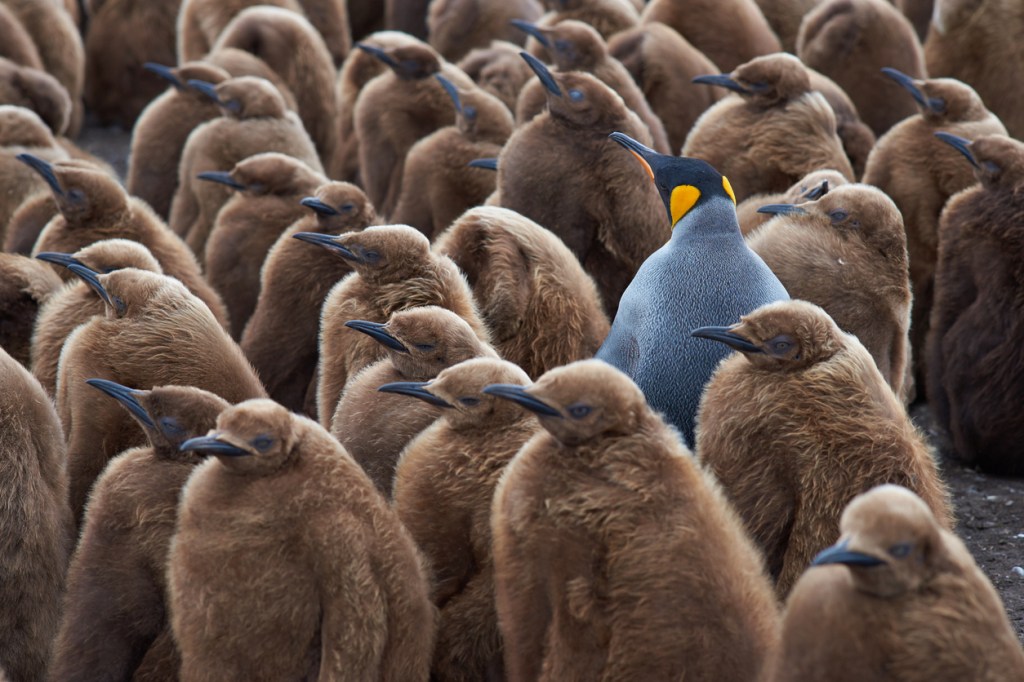
The last couple of years has been life-changing for me in many ways, but due to Covid-19, I started spending time online more than I ever have. I’ve also met a lot of people online. Some of these were people I could have met on other occasions due to social circles or similar interests, but some of them were people I would have never met, or spoken to otherwise. Soon, I realized I had the same dynamic, WIVFT play out in my life, but how did this happen?
Cancel-culture and attacks on free speech have been hot topics for many libertarians for the last years. We were already aware of religious groups and conservatives who didn’t like authority being challenged, and any comment or criticism of their sacred values was prohibited. This was already an issue, but when the same approach came from so-called progressives, many people couldn’t really position themselves on how to react.
I do not believe all progressives are so-called progressives. However, there are people who call themselves progressive but refuse to be challenged, attack free speech, and act on tribal instincts. This is not progressive, this is not even conservative, this is directly regressive. We’re right back where we started. Religion, lack of individual thinking, sacred values… It is all in there.
Interestingly, almost everyone I speak to feels more or less the same way about these groups and the ideas they are pushing.
How should I interpret this? A) I’m too deep in echo chambers and filter bubbles B) People are lying C) It is more complicated than that.
Even though this phenomenon was based on Turkish elections, there is one pivotal difference between what I’m experiencing and what happens during elections. In elections, there are usually a majority of people who think differently and vote differently than you do. A & B applies here, but when it comes to radical views that don’t have a substantial effect on headcount, it means you aren’t necessarily facing a majority group. They are rather more connected & vocal.
So in this case, what happens to the majority of people who really don’t agree with the loud, radical group? They remain silent. It is possible that they have some ties to the radical group in a way affecting their professional or social life. More often than not, there’s an artificially constructed climate that leads to people silencing themselves out of fear of being canceled. This is why, when arguing with the small radical groups, the first response you will get is ‘Just shut up!’. Not because you’re hostile or anything, but every single person who speaks in direct opposition to the narrative is a threat. It is a threat of normalizing being opposed to these ideas and at that point, they can’t make you feel like there is something wrong with you and tables start to turn.
Two years ago, I believed most people who didn’t speak up didn’t do so, because they had some sort of material gain from it, but the truth, I believe, is a bit more nuanced. Some people believe they have the wrong ideas because the artificial climate makes them feel this way. Others don’t even realize what the radical groups actually stand for, and they support them in the belief of the group actually advocating for the good cause, a.k.a. being on the right side of history. At times things boil down to being just ‘good’ or ‘evil’ and the silent majority does everything in their power to be good. In this case, that is to not speak up. People also have a tendency of wanting to feel good about themselves. They want to feel smart and accepted, but acceptance usually comes with a cost. Certain groups accept you only when your ideas perfectly align with their agenda. You might have the comfort of being part of a group, but you will also lose your identity and freedom.
In the previous paragraph, I mentioned the choices we make and the stances we take that come from groupthink, have something to do with being good or bad. This argument needs some sort of elaboration, as what is good and evil may take us to a philosophical debate. We can assume in this context that good vs. evil takes the form of more marketable values, and the marketability of those values is strongly attached to the social circle we’re in and sometimes there are gray areas. Let me explain. In a third-world country being a feminist won’t be easy, as you will be opposed to many values your society has, and it definitely won’t be marketable, but in a progressive social circle in the very same third-world country being a feminist may be a marketable value. Therefore, our marketability becomes important depending on which group we want to belong to.
I think rights and scientific methods have been the greatest inventions of human civilization. Science has been one of the greatest symbols of the enlightenment period, representing reason and standing up against dogmas. I always wanted to become a scientist. When I was a kid, I wanted to be a chemist and perform all sorts of cool experiments. A reason may also be that it was closely connected with being perceived as smart. Scientists were smart. Others were obviously very, very stupid. This might sound like the reasoning of a six-year-old, but symbols get deeply engrained in our psyche and play out all through our life. Politics become a part of this too.
Our self-image and tribal instincts can easily be manipulated. This functions like a domino effect. After the initial manipulation takes place, the manipulated also starts to manipulate. The belief formation process is still mysterious, but I believe it is strongly tied to feelings and identity. Once the group is formed and deemed marketable, naturally, a lot of other people will want to become a part of the group. This creates a continuous cycle.
I still think most scientists are smart people. At least when you develop the skill of being able to analyze data (which also can be manipulated) while remaining impartial, you get smarter than other people. But you’re not necessarily smarter because you’re a scientist or rooting for science. There is a backward logic in motion when we stumble against a person thinking like this. Normally, it should go as follows:
Be smart —–> Become a scientist
A number of people, perceive that rooting for science is what makes you smart. Believing in science or scientific concepts even though you don’t understand how the mechanisms work won’t make you any smarter, and they surely won’t make you a scientist. There are no differences between being a religious person or a science “believer”. Both rely on dogmas rather than knowledge, curiosity, and reason. Especially these people tend to be the most ardent advocates of scientists, certain procedures, or even the vaccine. The gap created by the lack of knowledge is almost always filled with something else, in this case; faith.
While these people seem to believe the idea that advocating for groups you idolize will make you a part of those groups, almost everyone else can see this is not the case. Most people, who advocate for things they don’t actually understand or just advocate for the sake of advocation, will be perceived as inauthentic on the receiver’s end. This creates an unpleasant feeling in others, which is worse for the advocated subject. Up until now, I wrote about groups I don’t agree with, but the same applies to groups who seem to advocate the same things as I do, such as liberalism. It can be felt and seen from outside how well one understands the principles of the ideology, even if you don’t agree with them. Inconsistencies will be minimal.
So, when people want to be perceived in a certain way, but they don’t agree with the group, they don’t say anything at all. People who don’t care about being a part of that group will speak up, but the response will generally be either mockery or inevitable attacks. Because this silent majority won’t stand up (I’m not saying they have to). These sorts of social guillotine sessions become something people want to avoid. They don’t approve of it, they will tell you in person, but they will also do anything to avoid it rather than stand up to it. This is unfortunate, and I try to not judge, as I understand the sentiment. The funny thing is, no matter how much they want to avoid it, as long as they don’t vocally support the ‘cancelers’ or whatever, they will become a target sooner or later.
To conclude, there aren’t really that many people rooting for the most radical ideas. People tend to cover the middle ground in different directions, but the well-connected and loud minorities who also usually have the resources to reach out to a lot of places will create the illusion that they now have the power. Their parade is just a distortion of truth, and you just need to scratch the surface to see it. I suggest you do because when you victimize yourself by claiming these people have more power than it seems, you’re actually contributing to their artificial climate which will become a self-fulfilling prophecy.
PS: I didn’t want to go into the whole IQ-profession correlation as in the post, the smartness indicated was more about skill set and being able to use your capacity to a certain extent. At this point, I refrain from disclosing my opinions on IQ.
 salpiozgur.com
Leave a comment