There is a famous quote by American poet and political activist Muriel Rukeyser, it goes like this “The universe consists of Stories, not of Atoms”. At first, you think it’s cringe, and it is an attempt by a writer trying to make her work seem more valuable than it actually is. However, when you think about stories, what they are, and how they come to life you realize this quote has more truth to it.
What is a story? According to Merriam-Webster, a story is “a statement regarding the facts pertinent to a situation in question”, but what are statements? Are they objective or subjective? Is it the same if I say “John left his house at 09:05 AM and got in his car, he then drove off” or “This morning, John rushed out without saying a word, he got in his brand-new car, and he seemed proud. He drove to work”. The difference is obvious. While the first one consists of observations, the second one comes with observations and assumptions.
Like the example above, most stories we tell each other, whether we think we are being objective or not, have assumptions and values attached. This is normal, but it is also important because it makes us see how important stories are in our lives. Our day-to-day life and our life story are narratives in themselves, narratives of who we are. We think personalities and our life stories are things that we could never change, but that is not true. Like all stories, the story we tell ourselves repeatedly can change and with the change of that story so will our personality. It is a strong belief of mine that personality is just a bundle of repetitive choices and values, but values can change and so can the choices we make.
If I told you your father was a murderer or that you were adopted, how would your childhood change in your eyes?
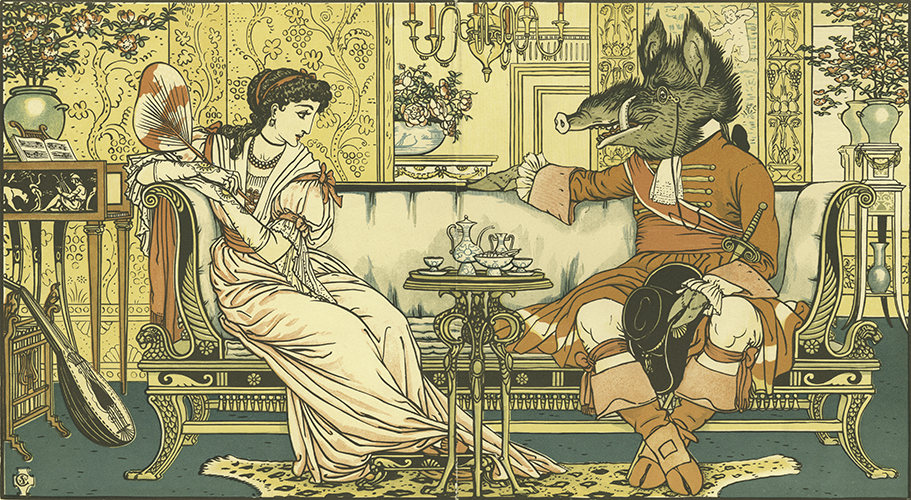
You will find new meaning by having that information, but the meaning doesn’t always come with information, it also comes with observations. Since our childhoods, we observe and make meaning. Our mother is smiling at us, she must love us, or she is frowning, perhaps we’ve done something wrong. These are all assumptions, but repeated enough, they will become our truth.
Our truth is a powerful claim, but what does it mean? It is a cycle. You believe one thing about yourself and that belief leads to action, the action solidifies the belief, and you have something powerful in motion. This might make you feel worried about your beliefs, but if you can become aware of those beliefs and actions, it gives you the opportunity to write a new story and create an intentional cycle. In the book “Personality Isn’t Permanent” the author explains how you can use your self-narrative to achieve goals and succeed at basically anything. While this is the pragmatic way to approach our narratives, I’m also interested in reaching a point where you can see your own truth. Therefore, every belief you have about yourself and your life should be questioned at times. Especially when you deeply believe in something and that something leads you to not take action at all.
Rule of thumb: If it creates a comfort zone, you must question it!
When we see the display of talent, we ignore the background of it. Of course, there might be some people who are born with certain qualities but what makes them great is the belief they could be great and constant endorsement from family, friends, and/or teachers.
Our first stories come from our parents. If we’re loved and accepted children, we’re very lucky. Usually, we tend to interpret the universe or our relationship with life in general based on our relationship with our mother and/or our caregivers. This initiates a very powerful cycle. If our mother has rejected us in some way, we will see the world through that lens for a very long time, until we realize that this is not true. However, we can also make this our whole identity by becoming a person who would be rejected at everything and by everyone. Our narrative can be our self-fulfilling prophecy because once we believe it, we do everything in our power to feed that narrative, which makes it even stronger.
While self-help content and psychology provide us with important tools, and I definitely believe narratives are quite useful, and they hold a dear place in human history and civilization, our stories also lead to something I particularly dislike; a distorted view of reality. Usually, when this distorted view of reality serves our best interest, we don’t even realize this and call ourselves lucky. Let me give you an example…
Say it, you have a narrative about yourself that deems you to be a successful person (although, narratives are more complex than that). You will choose people and environments which will help you succeed. If not, you will design environments that will help you succeed. Then, when you succeed you will have more successful people around you, which will lead to even more success. Some might believe this is the law of attraction, some sort of manifesting or metaphysical mambo jambo, but this is how we function. Personally, I don’t have a strong stance on the law of attraction, but I believe there are also explanations that stem from material reality. We don’t need an extraordinary power when all of us carry one in our heads; our magnificent brains. Nevertheless, when you’re this successful, your story might revolve around success and no one, not even you will question it because, well there is material proof, but the thing is, you’re re-framing certain events to make them look like they are a part of your success when in fact they aren’t and have never been. This distorts our reality. When this happens on a negative cycle then usually you will be diagnosed with some sort of pathology when in fact the cycle is the same, it just brings up different feelings. It is equally flawed in viewing one’s life, but one is damaging while the other is not.
Having a distorted view of reality may make us believe in weird things, but it also keeps us from seeing the truth on many occasions. Some people also re-frame their traumas and awful things that happened to them in this way because it is more meaningful when it is a part of a story, if not human lives are just a bunch of fragments floating in space. As humans, we like meaning, or better put ‘we prefer it’.
This is a problem with self-development and self-help. Yes, there are tools, and yes they are helpful, absolutely, but they can’t answer the real questions of life, the more meaningful, worthwhile ones.
Nevertheless, I will try to explain how you can trigger an intentional cycle. This is the personal method that I use. Adapt it to yourself. Also, you can find some value in reading “Atomic Habits” by James Clear and the book I previously mentioned “Personality Isn’t Permanent” by Benjamin Hardy.
First, you need to accept, some narratives are harder to change than others. Especially when you have concrete proof of why that narrative is true. So, maybe it would be wise to practice this with things you don’t have much resistance to before moving on to the tougher subjects.
For example, if you want to adopt the habit of reading regularly (assuming you don’t have a traumatic past with reading) you could start by saying “I’ve started to read every day”, and then every day you read one or two pages. Great. When that seems solid, move on to the next step, “I read every day and I read abundantly”. Try reading five to ten pages. Continue with this. In time those five to ten pages will easily become fifty pages, monitor yourself and when that happens you can start to say “I’m an avid reader” and you will be right. The most problematic thing I see with the self-development community is they have a lot of “fake it until you make it” mentality, which I find harmful. We should never underestimate the power of becoming because that’s where we will be our whole lives. Besides, if you look at your bank account that has $5 and say to yourself “I’m rich” so basically you are lying to yourself. That is disrespectful, and you deserve better. You are a worthy person even before you reach your goals. With the mindset of being not enough, you might reach your goals, but it will be a torturous process. Grow by being self-loving, not self-hating. This is what so many people preach, and I find that toxic, but of course, this is my personal opinion. So, don’t fake it until you make it but find a neutral launching ground and take action and trigger a new narrative from there. The process with problematic narratives is a bit longer and complicated, so perhaps I can write another blog post on that later, as it requires careful instructions.
Finally, I would like to finish off by touching on political narratives a bit (I had to!)
Populists, extremists, and most popularly Nazis have used one simple method of storytelling. Us vs. them. This is one of the most prominent stories told in politics. We are good and pure and others will be the cause of impurity, downfall, etc. We’re seeing a similar narrative around covid and especially masks. Now, we’ve created an idea of a world where the outside is dangerous, full of disease when in fact we’ve been living with viruses and bacteria all along, and most likely the way we use the masks, especially the cheap ones aren’t doing anything for us except feed that narrative. The idea of containment and disease-free self and the dangerous outside world is very similar to other ideas that caused grave harm to humanity.
Another popular narrative is Us against Everything Bad. This narrative is quite liked and used in the leftist communities. They are simply against everything bad, and they are for everything good. Of course, the nature of good and bad is not questioned thoroughly, yet they have a very powerful narrative. The Leftists will tell the stories of revolution and even the bloody ones will sound powerful because it is a story you can connect with. When you tell your story and when you believe it, even the ones that should make you look like a villain may resonate with the people who hear it, and surprisingly they could be on your side.
And the sad story of liberalism… Unfortunately, because liberals lean so much on rational thinking, they are a bit disconnected from the narrative side of politics and ideas. We don’t have marches and songs, powerful movies, books that can make people cry. We only have facts, reasoning, and debate. At the end of the day, one trumps the other. This is why “The Universe Consists of Stories, not of Atoms” and we need better narratives to succeed in politics.
 salpiozgur.com
Leave a comment