We are lucky Dostoevsky chose to write.
Perhaps we should thank his gambling habit. If it wasn’t for his debts, he might have never written such great masterpieces.
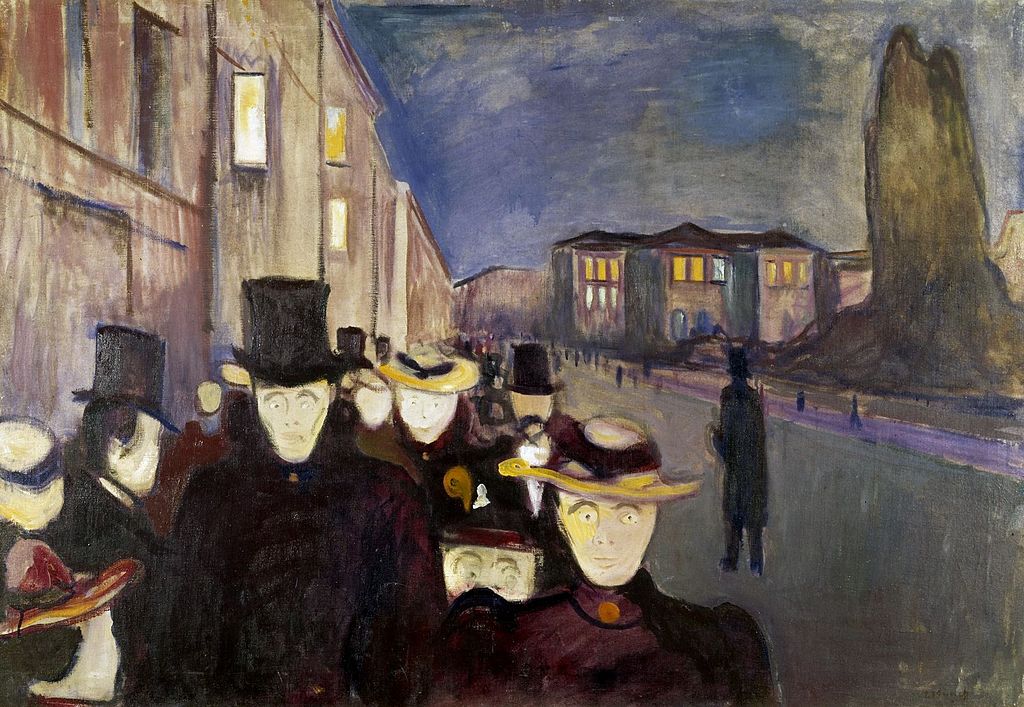
Funny how struggling and stress are framed in our modern world. They are thought to be the enemy of creativity of success and productivity. Some people suggest there is an optimal amount of stress, while others may demand a completely stress-free life. I’m not sure where I position myself here, but let’s talk about stress, struggle, and the shadow.
Dostoevsky is an author who has no mercy for his characters. He puts them in such situations you know they’re going to do something awful, and most of the time you’re right. You read the book with the sense of something bad is about to happen, and it does, but then the story goes on. Life is more or less like this. You feel something awful is going to happen and if you feel that way long enough, you will naturally be right because bad things do happen in life. However, life goes on.
Many people find Dostoevsky’s work too dark. He is strictly associated with the realism movement in literature, and I believe he is the most prominent author in this movement. His books may have dark themes, and struggling characters, but the story still goes on. I think most people dislike this genre and his work because it is real to its core. Naive young men, brutal loan sharks, heroes, friends, and foes. None of these people are unidimensional. They all come with a shadow. When Raskolnikov kills the loan shark, he is not relieved. He soon realizes she wasn’t the root of all evil in the world but a mere reflection. We don’t like Dostoevsky because we can clearly see the shadows of the characters, and we don’t like shadows. Dostoevsky has been criticized on various accounts, one of those is that his stories are full of ‘glorified clichés’, regarding this criticism the Scottish poet and critic Edwin Muir said: “regarding the ‘oddness’ of Dostoevsky’s characters, it has been pointed out that they perhaps only seem ‘pathological’, whereas in reality they are ‘only visualized more clearly than any figures in imaginative literature”.
According to Jungian analysis, the shadow is the unconscious part of a person. Disowned and disregarded. I think the biggest shadow on earth now belongs to the civilization itself, as we progressed and repressed our animal nature the shadow grew bigger. When we talk about our wild, innate nature or even the animal brain, most people imagine something blood-hungry and savage, when this doesn’t have to be the case. Our repressed animal nature could also bring us to a harmonic relationship with nature and our tribe. In Dostoevsky’s stories, most characters don’t know how to control and express their shadows, especially in Dostoevsky’s early work, but this changes in time because so does Dostoevsky. His characters learn from the inevitable darkness that is so carefully depicted in the nature of the events, places and even things.
In Joseph Frank’s first volume of five-volume work on Dostoevsky, there is a passage on his character when he was a young man:
“Rizenkampf characterized him as “no less good-natured and no less courteous than his brother, but when not in a good mood he often looked at everything through dark glasses, became vexed, forgot good manners, and sometimes was carried away to the point of abusiveness and loss of self-awareness”.”
At the time, his writing was more restricted. You can clearly see this in Poor Folk. As time passed, he found a way to express the shadow in his work. Years later, during his exile to Siberia, there were total opposite claims about Dostoevsky. He was thought to be one of the most dangerous convicts by the officers, but for the other convicts, he was one of the wisest and the most kindhearted. You see, even though his circumstances were far worse than his apartment in St. Petersburg, his outlook was much better. He had a chance to express his shadow and of course, he was a man of faith.
This brings me to my next point; stress and struggle:
You might have had friends who you were jealous of. Great family, happy upbringing, wealth, good education, fine career prospects… Then they get hooked on drugs, or they simply stop doing anything with their lives, they are either paralyzed by something or their life seem to be floating in the air. They get self-destructive because sooner or later, the shadow creeps up. The same happened to Dostoevsky. He had just graduated and was living the good life by going to operas, theater, and gatherings when he was introduced to gambling. See, his works are full of glorified clichés, because his life is a glorified cliché. Perhaps, he needed to be in debt, to be a gambler in order to get triggered enough to write. While we think our worst parts are buried in our shadow, it is most often our best parts we deem inadequate and shove to the deep dark labyrinths of the subconscious mind.
Before his death, he asked for the parable of The Prodigal Son to be read to his children. This Parable is the final parable of a cycle of redemption. He wanted to forgive and be forgiven and remembered this way. He knew, as individuals, we must walk our own paths and redeem ourselves. Today, I remember and honor him with lightheartedness, he was a great man not because he was extraordinary. He was great because he was an ordinary man who knew how to tell his story.
May he rest in peace.
 salpiozgur.com
Leave a comment